

My PCR is a coalition of chronic myeloid leukemia (CML) patient advocacy organizations and The Max Foundation. We are collectively raising awareness about the importance of global access to polymerase chain reaction (PCR) monitoring and encouraging dialogue about testing between patients and their physicians.
This involves confronting several challenges:
- PCR testing requires expensive diagnostic equipment not available in all countries
- Not all physicians are properly trained on PCR testing for CML patients
- Many CML patients do not understand what PCR testing is and why it is so critical to their health
In partnership with patient advocacy organizations around the world, My PCR works to address these challenges by providing educational information about PCR testing in multiple languages, offering grants for partners to raise awareness within their local communities, and supplying informational tools and resources.
Understanding Chronic Myeloid Leukemia
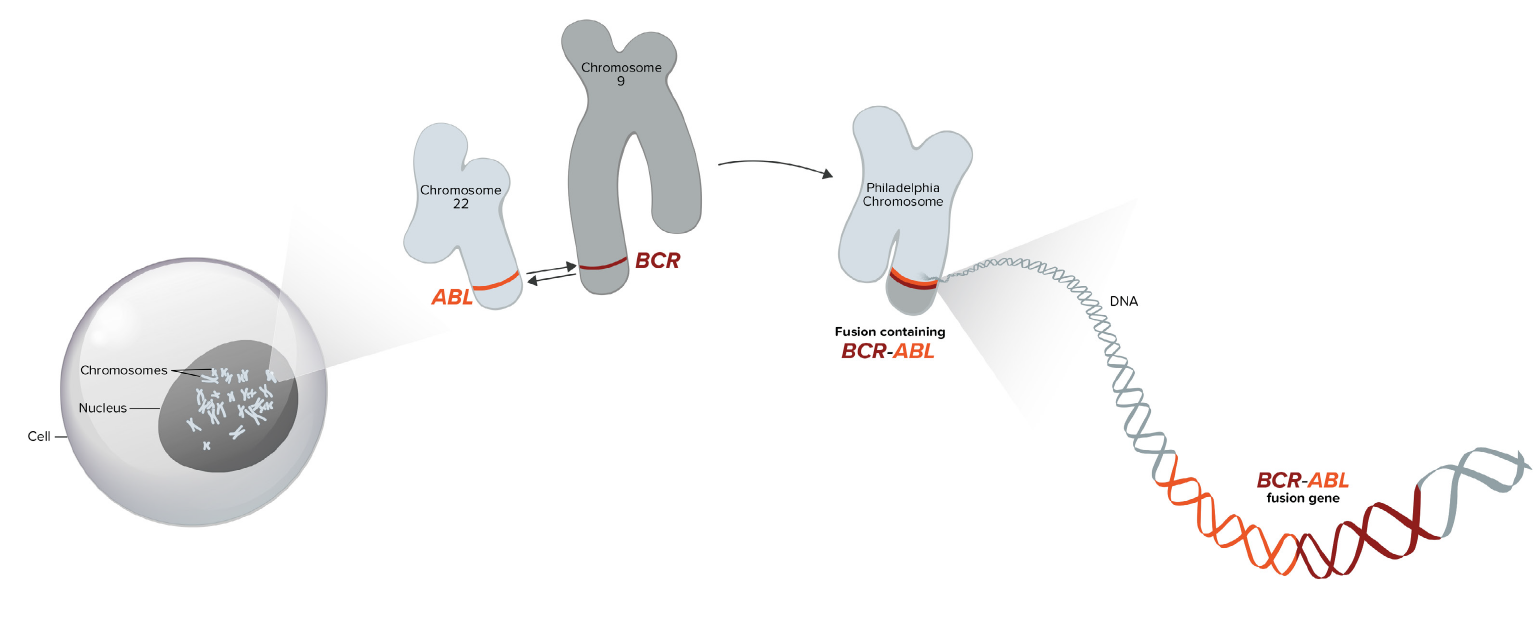
Chronic myeloid leukemia (CML) is a cancer of the white blood cells that is associated with an abnormal chromosome called the Philadelphia chromosome (Ph+). A chromosome is an organized structure found inside a cell that contains genetic information known as DNA. Ph+ CML is caused by BCR-ABL, an abnormal fusion gene that is formed when a piece of chromosome 9 and a piece from chromosome 22 swap places. The abnormal gene creates a protein called BCR-ABL, which causes changes in cells that lead them to become cancerous.
What is PCR?
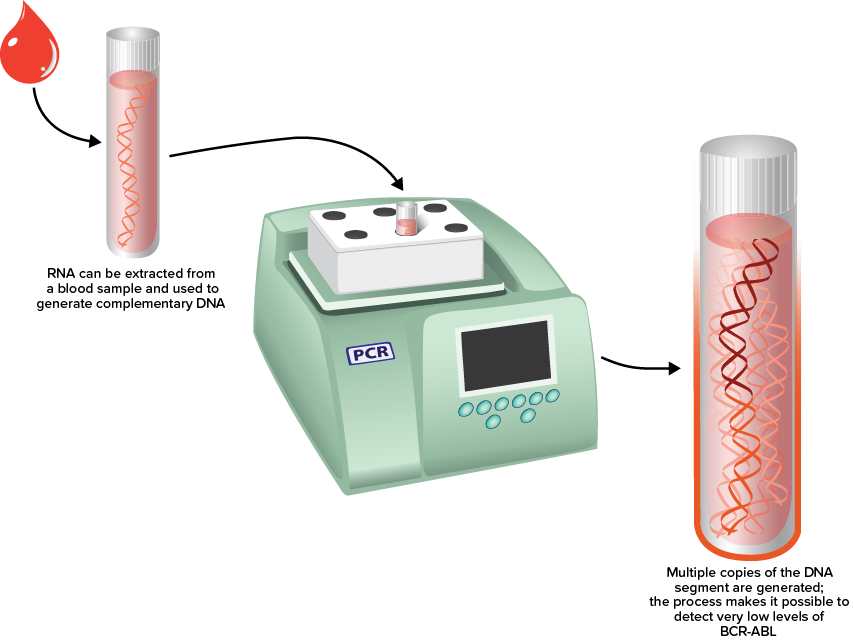
Polymerase chain reaction (PCR) is a blood test used to diagnose CML and measure response in patients who are on tyrosine kinase inhibitor (TKI) treatment. PCR is not only used in CML; it is also used in other conditions and is generally one of the most accurate ways to detect the presence of a substance.
Why is PCR testing necessary?
Patients need PCR testing to diagnose CML by detecting the presence of BCR-ABL and monitor their response to treatment by measuring the prevalence of BCR-ABL.
CML usually requires lifelong treatment, so even after a patient’s initial diagnosis, consistent access to PCR testing is critical to monitor their disease. Testing is recommended every three to six months depending on a patient’s level of response to treatment. By monitoring the level of BCR-ABL over time, a physician can compare results and make informed decisions, like whether it’s necessary to change treatment to better treat the disease.
What is TFR?
Treatment Free Remission (TFR) is an option patients can discuss with their physician. Patients who have been on long-term treatment and whose diagnostic tests show they are responding well can try TFR, which involves living without daily medication.
Frequently Asked Questions
Click here to find answers to some of the most common questions about PCR testing, monitoring, and treatment free remission.
Additional Resources
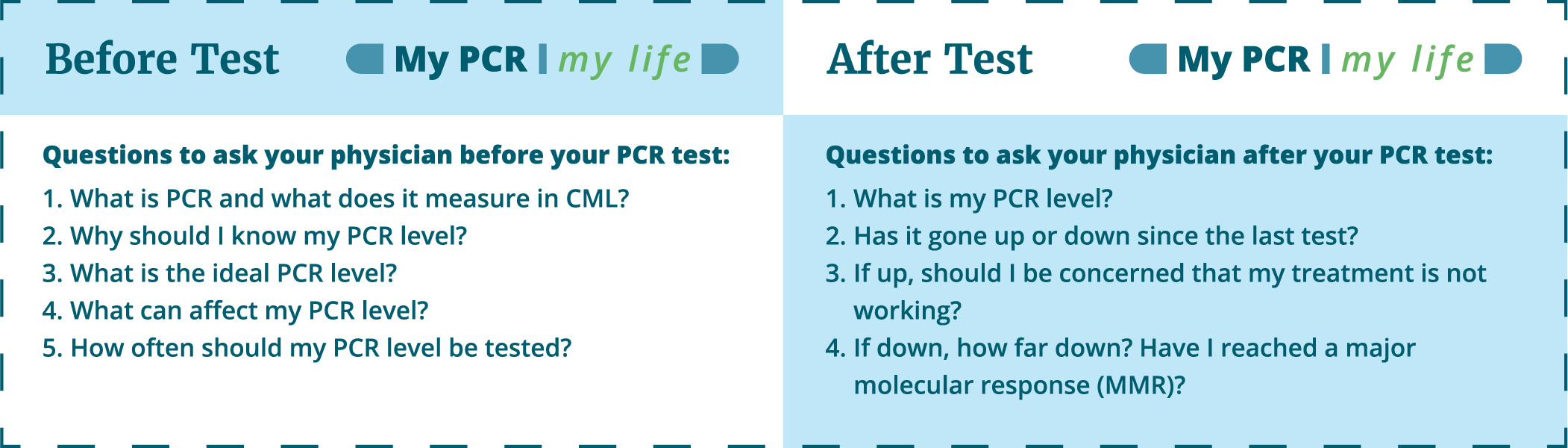
Wallet Card
Download, print, and take this wallet card along with you to your doctor’s appointments.
Helpful Links
- Patient Friendly ELN Guidelines by CML Advocates Network
- CML Resource Page by The CML Support Group
- Animated video on PCR by CML Society of Canada
- CML Resource Page by CML Society of Canada
- CML Disease information by The Leukemia and Lymphoma Society