Cancer is complicated. For many patients, the path from first symptom to effective treatment is a long and difficult one.
Germán experienced a lot of bumps along the road.
“They told me it was cancer and that I would not live more than two or three years, and that I should not continue treatment. That was terribly worrying – terrible. It even made me feel like taking my own life,” he said. “Those years they had mentioned passed, and whenever I felt a little unwell, I thought it was the end. But no, I kept going.”
The beginning
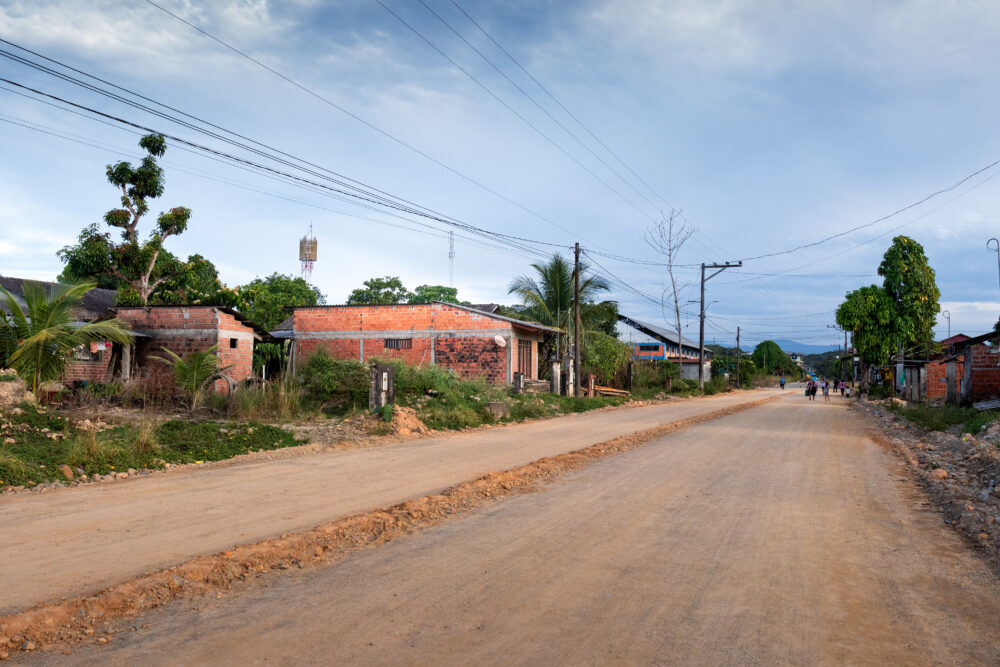
Germán, 49, lives with his mother in Mariposas, Bolivia. It’s a small tropical town about five hours north of Cochabamba, one of three Bolivian cities where The Max Foundation has partnered with local physicians to provide access to treatment and support for people living with cancer and rare illnesses since 2002. We work in 19 countries across Latin America and help almost 4,500 people, including Germán, who – until his mid 20s – had lived a relatively normal life in his rural community.
“What I like most here in the tropic is the fruit, above all,” he said. “We have a bit of everything to eat, directly from the tree or the plant.”
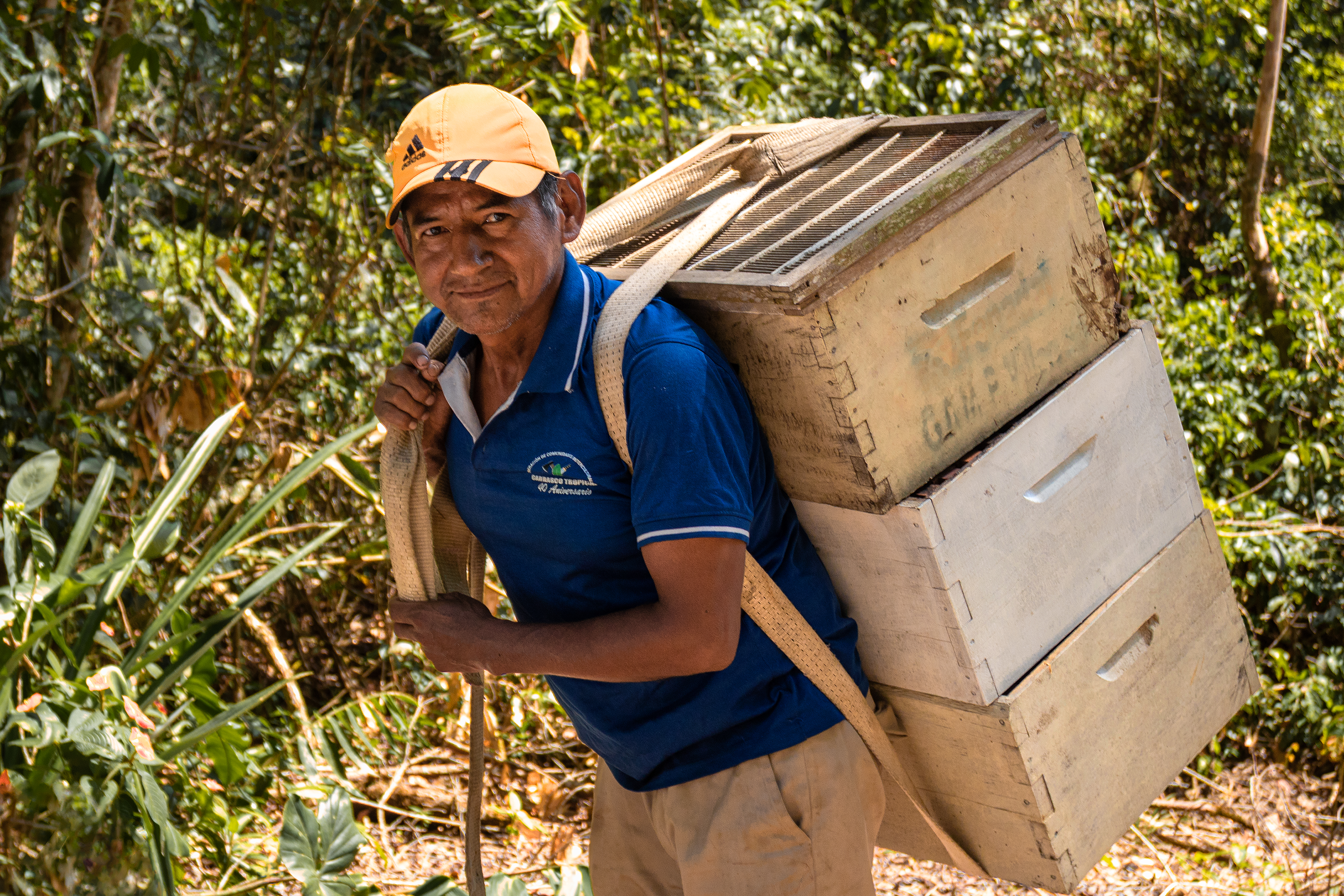
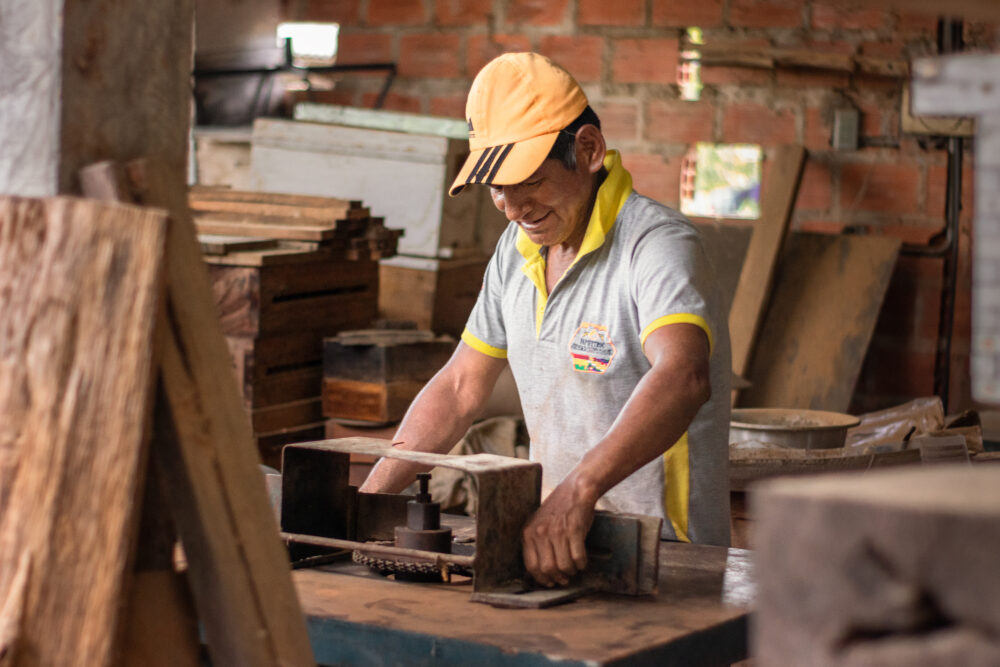
He used to plant pineapples, and now he works with coca, a native plant in South America. Germán also works in carpentry and welding. His mother, still active at 86, helps with the cooking and laundry. Whatever free time he has left is reserved for his favorite hobby, beekeeping.
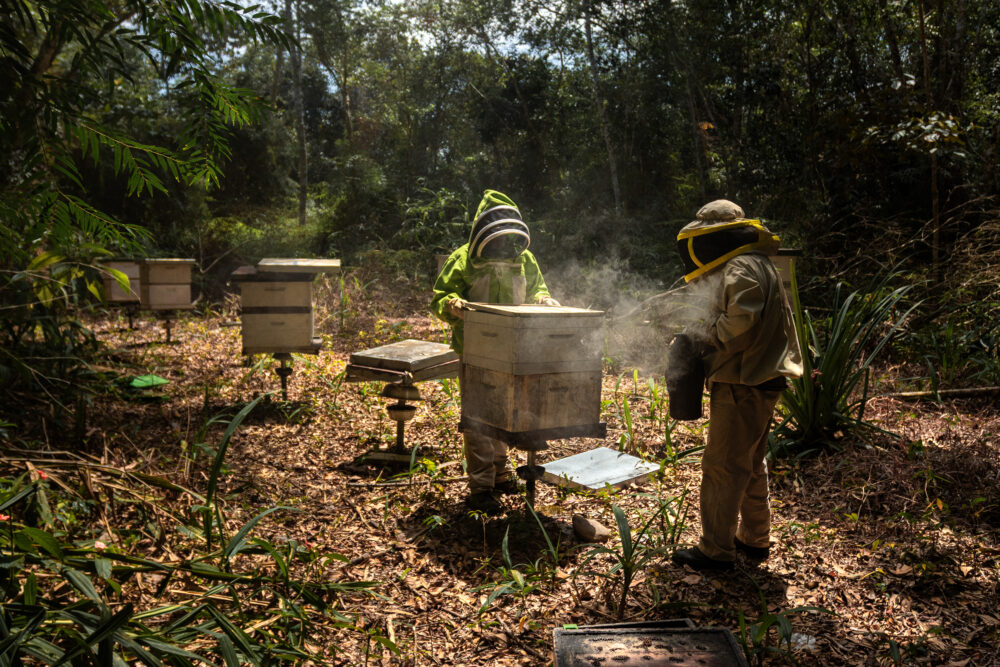
“With bees, you have to go check on them almost all the time, look after them, clean, and so on. They get sick, and you have to go treat them – a bit of everything,” Germán said. “Since I have several boxes here and there, I also have to travel some distances. Bees are my greatest entertainment.”
Germán, left, and his friend checking on the bees
With a schedule like Germán’s, getting sick is not an easy thing to manage. In 2000, bruises started appearing on his body and his knee swelled up. After a trip to the hospital to drain his knee, he returned home and everything seemed fine. Then, two more bruises appeared.
He could finally travel to a hospital in Cochabamba after a month-long roadblock, a frequent occurrence in his region. They didn’t know what he had, so they referred him to a second hospital that didn’t help. Finally, he went to a private hospital that referred him back to the second one.
There, Germán was diagnosed with chronic myeloid leukemia (CML), an uncommon type of blood cancer that causes increased production of white blood cells. He wasn’t sure what that meant. The doctor told him it was a simple illness and he would get better.
Germán started taking the medication he was prescribed. But it was very expensive, and he went through all his savings.
“Many times, I had to ask for donations so I could get back home after buying my tablets,” he said. “At that time, I bought them in Santa Cruz. Many times, the price of the medication went up, and I only had enough bus fare to get halfway.”
Despite taking the medication he was prescribed, Germán wasn’t getting better. His white blood cell count continued to climb.
Germán was angry. He considered selling his home to afford the medication but decided against it because it wasn’t making a difference. Instead, he met with his doctor and told him to prescribe a treatment that works.
Finding Max
In 2004, Germán was referred to The Max Foundation’s program in La Paz, where he met Dr. Ricardo Amaru after a 488-mile bus journey that took all night. He was prescribed Novartis’s imatinib. Finally, Germán began to feel better.
He continued making that journey until 2008, when Max’s partnership expanded to Cochabamba – only 126 miles away.
Germán’s hometown, Mariposas
Germán started seeing Dr. José Macías Abasto, an internist and hematologist at Clínica Los Olivos, who has partnered with Max for more than 15 years. In collaboration with Novartis, Max provides access to treatment free of charge for people living with cancer.
“The possibility arose to continue seeing our own patients who came to us, and once we diagnosed them, it was frustrating to have a diagnosis without having a treatment,” Dr. Macías said. “That motivated us to get in contact with The Max Foundation so that The Max Foundation could create a station here in Cochabamba.”
Now, there are 98 active patients in the Cochabamba program, and 403 in Bolivia. Dr. Macías and other healthcare professionals at the clinic volunteer their time to help, seeing people up to two hours a day on top of their regular schedule.
“They are always grateful, happy, and pleased because it is a benefit to have medication provided directly and free of charge,” he said. “A patient who has no insurance and no financial resources truly cannot access it without this support because of the cost … Ultimately, if there were no help from The Max Foundation, the vast majority of patients would remain without treatment or with very irregular treatment.”
The Max team is grateful for partner physicians like Dr. Macías. They make it possible for people living with cancer to get the treatment they need. For Inés Garcia Gonzalez, Max Region Head for Latin America, knowing Germán is doing well is especially meaningful.
“I remember Germán from 2004, when he first joined the GIPAP program, and I am truly delighted to know that he continues to receive treatment and is responding so well to it,” she said. “I also remember that during the early years, Germán had to travel for two days in order to attend his medical appointments and collect his medication in La Paz. Later, we were able to support him by opening a new treatment center in Cochabamba and transferring his care to Dr. Macías.”
Working on a project
Making friends along the way
It hasn’t been all smooth sailing for Germán since then. People in town have expressed suspicion because they don’t fully understand what it means to have CML. There have also been administrative difficulties that delayed shipments of the medication to Bolivia, which made him worry.
Fortunately, he has help. His friends, fellow patients, and the Max team offer support. Dr. Macías also works with him to find solutions if there are delays.
Germán and his mother
“Here in the tropic, with so many roadblocks, the last shipment of medication was brought to me from Cochabamba in an ambulance,” he said. “A friend, a colleague who works at the mayor’s office, brought it after I asked him; Dr. Macías’s nephew picked it up, and they brought it to me by ambulance. The same thing happened in past years. Another friend also brought it to me by ambulance. They always help.”
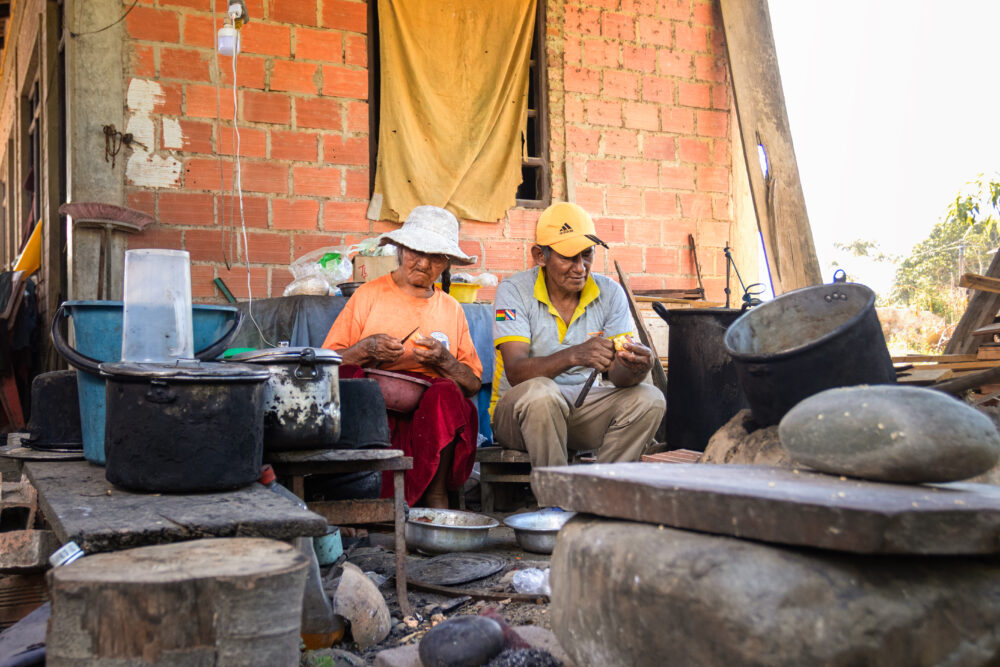
Germán’s mother is another source of support. At first, she didn’t understand what was happening. She thought her son wasn’t sick, or that he wasn’t taking his medication. Then, Dr. Amaru and Inés visited and explained CML to his mother. That helped her better understand the treatment.
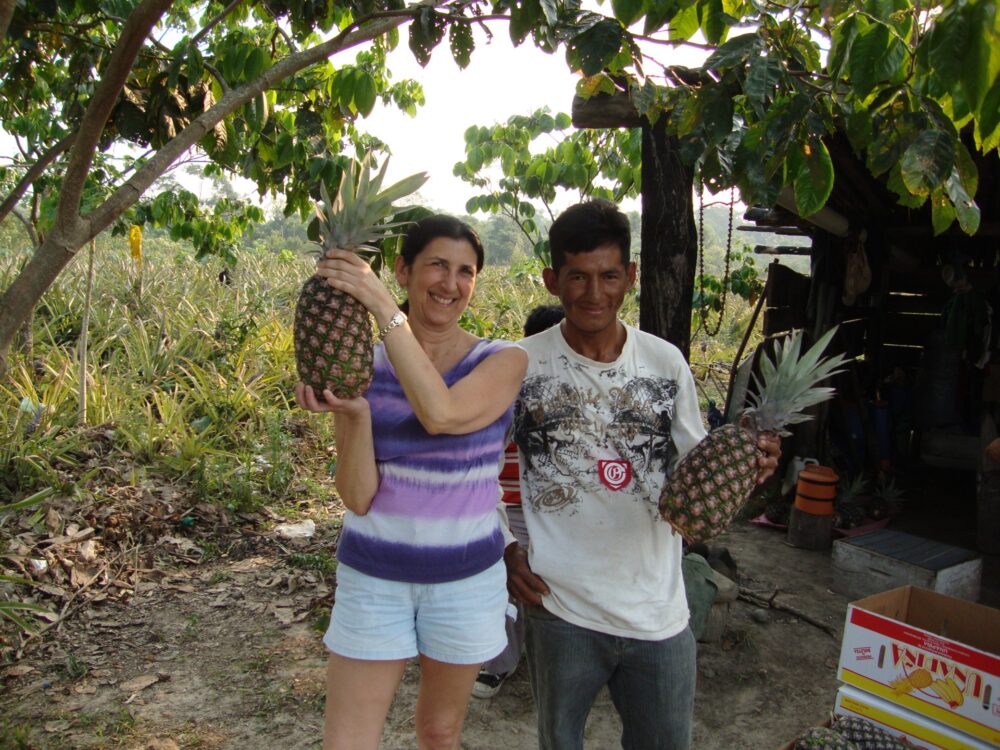
“I also have very fond memories of our visit to his home in 2010. We spent a wonderful day with Germán and his mother, who kindly invited us to share lunch with them,” Inés said. “During our visit, Germán proudly showed us his beehives, his pineapple fields, and the house he was building for his mother.”
Inés and Germán in 2010
Now, Germán can focus on taking care of his bees. He sells honey from his home and at local fairs. Of course, he’ll continue working hard as well. Since he was young, he has dreamed of becoming a mechanic. He’s hoping to start the program next year.
Germán has been living with CML for more than 25 years. He has had many ups and downs, but the journey is easier now, thanks to access to regular treatment and support.
“I feel calm,” he said. “Only when I take the tablets do I say, ‘I am sick; there is nothing I can do.’ After that, once I am not taking them, I forget about the leukemia. I feel happy.”
Interviews, transcription, and translation by Lyat Granati Written by Kelsey Bray Photos by Jhonny Rivera Sausa
The Max Foundation is a leading global health nonprofit organization dedicated to accelerating health equity. For 28 years, Max has pioneered practical, scalable, high-quality solutions to bring life-extending treatments and patient-centered health care to more than 100,000 people living with cancer and critical illness in low- and middle-income countries. Max believes in a world where all people can access high-impact medicines, where geography is not destiny, and where everyone can strive for health with dignity and with hope.
Related Articles
Critical Partnerships are Saving Lives Globally
All of us at The Max Foundation are wholly committed to maximizing every opportunity to collaborate and build new partnerships on behalf of the patients we serve in low resource settings. We are excited to move onward to a new chapter with innovative opportunities to expand our impact. We hope you will see a place for yourself to join us in this effort to close the cancer divide!
Keeping Our Cool: Developing a Cold-Chain to Further Treatment Access
A “cold-chain” product must remain within a specific temperature range at all times. On days- or weeks-long international shipments, it’s especially challenging (and expensive) to keep medicine at a constant temperature. Despite the inherent challenges, adding cold-chain capability is well worth the effort for the patients we support. By doing so, The Max Foundation will be able to better meet the needs of patients who are unresponsive to tablet therapies.
Leading the Way in Drug Quality and Patient Safety
The Max Foundation leads the way in developing systems to ensure adverse event reports are shared promptly with local health authorities through prescribers, and with drug manufacturers alike.
The Max Foundation uses cookies to improve your experience on our site. Please read our Privacy Policy for more information.