The Max Foundation Renews and Expands Agreement with Incyte
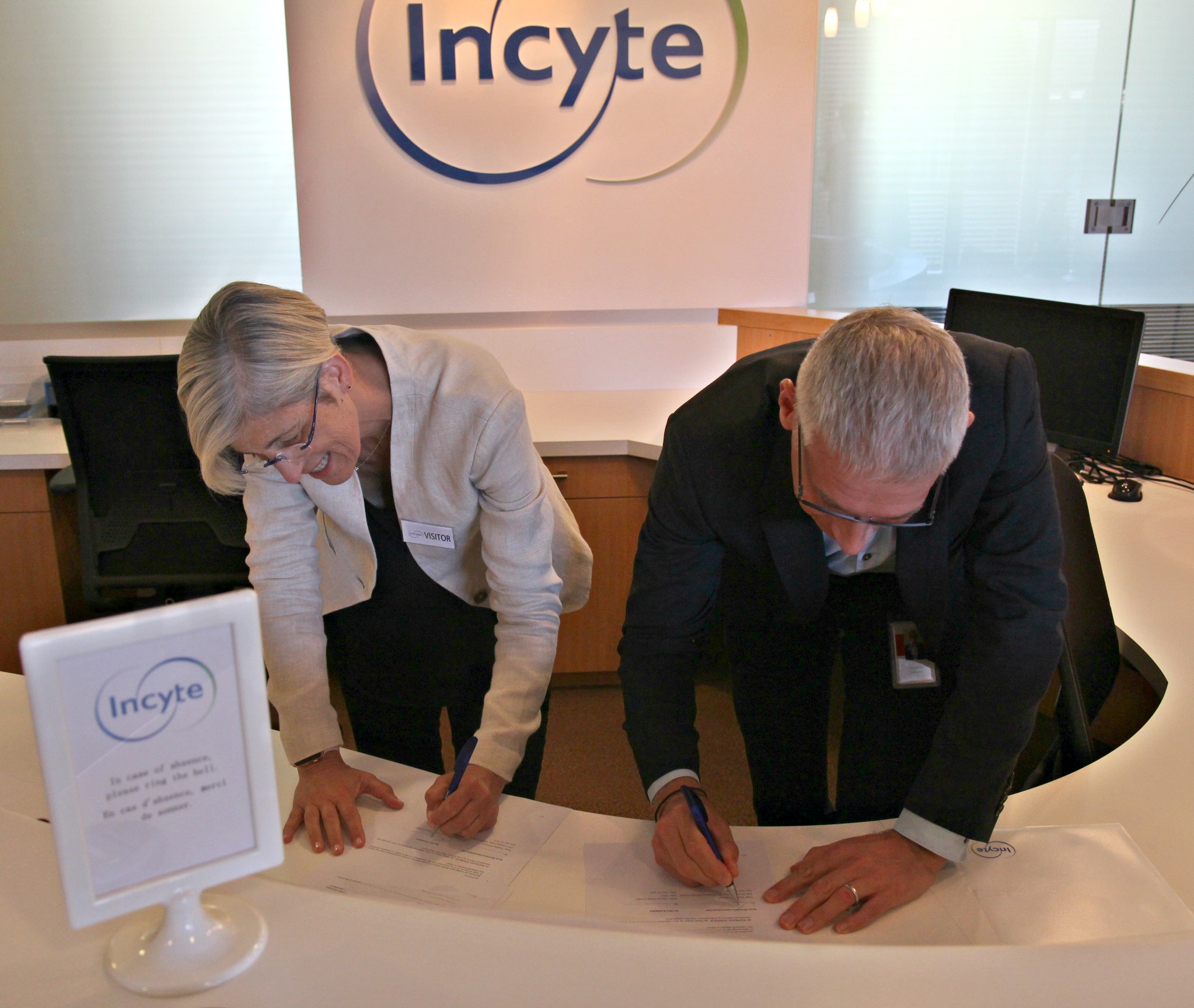
The Max Foundation is proud to announce it has signed a renewed collaboration agreement with Incyte – a dedicated pharmaceutical partner and member of our humanitarian pact.
Since February 2017, Incyte has partnered with The Max Foundation to assist patients with cancer in Central Asia and Eastern Europe who are in need and unable to access treatment. The renewal by Incyte will allow The Max Foundation, through our drug donation program Max Access Solutions, to expand the number of patients who may be eligible to receive treatment with Iclusig (ponatinib) from 35 to up to 50 at no cost for as long as needed.
“As we work to expand treatment access for patients in low-income countries, we are grateful to have committed partners like Incyte,” said Pat Garcia-Gonzalez, CEO and co-founder of The Max Foundation. “We’re so excited to not only continue our collaboration, but also to expand its size and bring effective medicine to more patients in need.”
“At Incyte we are fully aligned with the mission of The Max Foundation, focused on increasing patient access to care, support, and treatment,” added Jonathan Dickinson, General Manager of Incyte in Europe. “We are proud to be part of a program dedicated to making cancer treatments available to appropriate patients in Central Asia and Eastern Europe. We are happy and privileged to partner with and support to The Max Foundation’s efforts and look forward to another year of making a difference for patients with cancer.”
We at The Max Foundation express our thanks to Incyte for their continued collaboration, and will keep an ear out for the Incyte Bell (pictured below, and rung once each week for each new patient treated).
The Max Foundation is a leading global health nonprofit organization dedicated to accelerating health equity. For 28 years, Max has pioneered practical, scalable, high-quality solutions to bring life-extending treatments and patient-centered health care to more than 100,000 people living with cancer and critical illness in low- and middle-income countries. Max believes in a world where all people can access high-impact medicines, where geography is not destiny, and where everyone can strive for health with dignity and with hope.
Related Articles
The Critical Role of Humanitarian Donations
In a recent commentary published in the Journal of Global Oncology, co-authors Pat Garcia-Gonzalez MA, Gilberto Lopes MD, Erin Schwartz and Lawrence Shulman MD, clearly outline the need and efficacy of humanitarian donation programs using lessons learned from the success of joint access initiatives between Novartis and The Max Foundation.
Celebrating One Year of Spot On CML
The numbers are in! The Max Foundation is thrilled to announce that Spot On CML, our diagnostic collaboration with Fred Hutchinson Cancer Research Center, has provided free testing to 371 patients across 15 countries in its inaugural year.
Innovator Jerry Radich of Fred Hutch joins The Max Foundation’s Executive Board
The Max Foundation is thrilled to welcome longtime advisor, Dr. Jerald Radich of the Fred Hutchinson Cancer Research Institute into the Executive Board. Dr. Radich has been a guiding star in our innovative work for many years helping people face cancer with dignity and hope, especially in the area of improving access to critical diagnostics in low- and middle-income countries.
The Max Foundation uses cookies to improve your experience on our site. Please read our Privacy Policy for more information.