Living With Lung Cancer
By Elizabeth
Renal Nurse at The Nairobi Hospital in Kenya
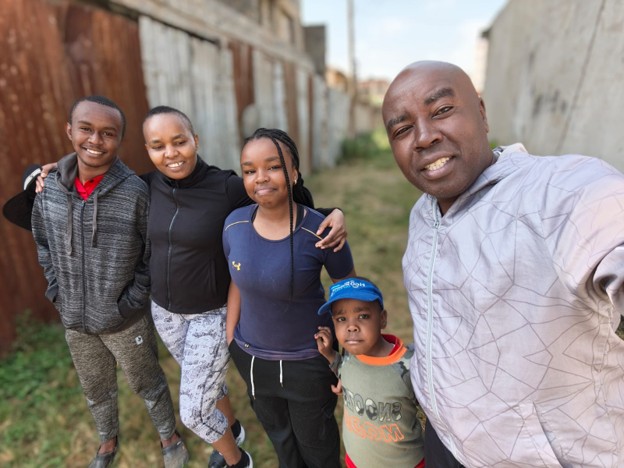
My name is Elizabeth. I am 41 years old, a proud wife, and a devoted mother to three beautiful children, a 19-year-old son, 13-year-old daughter, and 5-year-old son. By profession, I am a renal nurse at The Nairobi Hospital.
Before my diagnosis, health and vitality were my life. I was active, dedicated to morning jogs, disciplined at the gym, and careful about nutrition. Growing up, I was rarely ever sick. Yet, cancer has always cast a shadow over my paternal family—I lost an aunt to uterine cancer, while two of my cousins and a niece are currently fighting their own battles against various forms of the disease.
My ultimate motivation to fight—and to live—is my family. Above all else, my heart longs to see my children grow up with both of their parents by their side, reaching every dream and landmark I have always envisioned for them.
Looking back, there were subtle signs that I initially dismissed, assuming they were just the physical tolls of an active life. Around February 2025, I noticed a mild pain and felt like I couldn’t take a deep, full breath. “I must have pushed too hard in the gym,” I told myself. I also noticed a small, painless swelling on my back. By March, an intermittent pain began creeping into the right side of my back, just below my armpit. Because it wasn’t constant, I brushed it off.
Then came April. While working hard at the hospital, I suffered a sudden blackout that lasted for a minute. That was my wake-up call. I immediately sought medical attention. Extensive blood tests, an ECG, and an echocardiogram all came back completely normal. The doctor attributed it to severe burnout and advised me to go home and rest.
I pushed forward and kept working, but by late April, I developed a distinct wheezing sound in my lungs at night. Returning to the clinic, I was given nebulizer treatments and inhalers for suspected asthma. But my clinical instincts urged me to ask for more—I requested a chest X-ray. When the scan raised suspicion for tuberculosis (TB), the doctor recommended a chest CT scan. As a healthcare worker, the moment I looked at the scan results, I knew I couldn’t wait. I took my results directly to The Nairobi Hospital for urgent evaluation.
By May, a chest physician ordered a TB test, which returned negative. That was the turning point: he admitted me for a lung biopsy. I also underwent gene mutation testing at the Aga Khan University Hospital. By mid-June, all the pieces came together, and a definitive diagnosis was made.
Being a medic meant I could interpret my own test results before the doctors even had a chance to explain them. From the very first moment I saw that initial chest X-ray, I felt the gravity of the situation and I knew I had to move with relentless speed. My wonderful colleagues rallied around me, using their networks to connect me with top specialists without delay.
Yet, the emotional weight hit with full force when the biopsy results arrived. Instead of offering counseling or walking me through the findings, the chest physician simply handed me the sealed envelope and told me I needed to see an oncologist. Receiving such life-altering, devastating news in that cold, unmediated way shattered my heart. I read the biopsy report by myself, overwhelmed and utterly broken, and walked out of the office.
Subsequent scans confirmed my worst fears: it was stage 4 lung cancer! Having cared for many cancer patients as a nurse, I had witnessed their intense suffering, and I was terrified to picture myself in that same position.
But God kept me strong. Apart from the single month I took off work for investigations, I returned to duty. The outpouring of love saved me: my colleagues wrapped me in emotional and financial support, my church lifted me up in relentless prayer and home visits, my husband’s running group offered invaluable financial assistance, and my two sisters stood as immovable pillars of strength, checking on me constantly and meeting every need.
Hope began to shine when my doctor reviewed the gene mutation test. He reassured me that having a targetable mutation opened the door for precision, targeted therapy. For the first four months, my treatment was funded through SHA and private insurance provided for by my employer. Soon after, I was blessed to be enrolled in a free treatment program funded by The Max Foundation, which covered my medications for a full year.
For the past three months, my treatment regimen has transitioned to a targeted drug not covered by The Max Foundation program. This transition was critical and life-saving: my doctors switched me to the medication specifically because of its superior ability to cross the blood-brain barrier, which became urgent after scans revealed metastases had spread to my brain.
While I am able to access this medication at The Nairobi Hospital using the health insurance provided through my employer, national supply shortages frequently disrupt availability. When hospital stocks run dry, I am forced to source my medicine out-of-pocket from private pharmacies. At an overwhelming cost of over $6,000 for 3 months, buying this medicine privately creates an immense, steep financial strain on my family—yet it is a price we strive to pay for my recovery, and my future.
Despite these hurdles, the side effects have been mild enough that I can continue working and living my life. Going to the gym—though less frequent now—keeps my body strong, and I take long, grounding walks to maintain my vitality.
The true miracle came with my second and third PET scans, conducted every six months: the affected organs showed remarkable recovery! That was the moment fear lost its grip on me. I realized with absolute clarity that cancer—no matter the stage—is NOT a death sentence. There is treatment, and there is life after diagnosis!
To anyone reading this: Listen to your body. Never ignore the small, subtle changes. Make routine check-ups a standard part of your life. Be vigilant, trust your instincts, and act without delay. Listening to your intuition can literally save your life.