Staff Perspectives: 25 Years of Access to Cancer Treatment & Hope
Through the voices of some of our longest-serving team members, we look back at The Max Foundation’s decades-long cancer treatment access partnership with Novartis.
For more than a quarter century, The Max Foundation (Max) and Novartis have been working together with a shared purpose: accelerating health equity, one patient at a time. What began as a partnership in 2001, focused on providing humanitarian access to one treatment, for one type of rare blood cancer, has grown into a program that goes far beyond medicine. Since its inception, we have reached over 100,000 patients across more than 90 low- and middle-income countries, expanded to multiple disease areas and treatment types, and remained steadfast in the belief that access to medicine is a human right.
Born out of the belief that where you live should not determine if you live, this revolutionary collaboration has helped transform the lives of patients, caregivers, families, healthcare workers, and entire oncology health systems. As we mark this 25-year milestone, we invited members of our team to share their reflections.
Their stories provide a unique window into how a shared vision, an innovative model, and an unwavering commitment to help those in need was made possible, together.
Launching a “Complete Collaboration” in Latin America
Ines Garcia Gonzalez Region Head, Latin America 23 years with The Max Foundation
“In May 2001, Glivec, a breakthrough treatment and the first of a new class of oral cancer medicines, developed by Novartis for the treatment of chronic myeloid leukemia (CML), was approved by the FDA. That same year, the first agreement was signed between The Max Foundation and Novartis to create a donation program called GIPAP (Glivec International Patient Assistance Program).
A few months later, while I was working as a volunteer for the organization, Pat Garcia-Gonzalez, Max’s co-founder and CEO (also, my sister), called me and asked me to reach out to Novartis Argentina to begin implementing the new program in the country. That is how, one day, I visited the Oncology Business Unit at Novartis in Buenos Aires.
From that moment on, a process of complete collaboration between the two organizations began, with the goal of making the medication accessible to the patients in need. We first opened Argentina, then Chile, and later Uruguay. In all three countries, the first patients approved through GIPAP—approximately 20 to 22 in each country—had previously participated in the Expanded Access Program* and needed to continue their treatment. Afterward, the countries were opened to enrollment of new patients. Through Novartis representatives, I connected with physicians. Through the physicians, I connected with patients.
These were the years 2002 and 2003. Communication capabilities were very different from what they are today. The main channels were emails and telephone calls made through landlines. Documents were received by fax. Together with Novartis, we promoted the program. The primary goal was to ensure that no patient in need of treatment with Glivec would be unable to access it.
As the program continued to grow, I began bringing together patients and their families. The idea was to create groups that could support one another. This is how ALMA (Asociación de Leucemia Mieloide de Argentina), AsUL (Asociación Uruguaya de Leucemia), and Maxi-Vida Chile were born—three patient support organizations that emerged from our meetings.
I especially remember three patients who, from the very beginning, demonstrated remarkable leadership and a strong desire to help others. I will never forget Nora in Argentina, Margarita in Chile, and Mariela in Uruguay who, sadly, all passed away nearly 19 years ago and were dear friends.
But my deepest gratitude, as I look back on those years of openness and generosity on the part of the company, will always go to the former Oncology Business Unit Head of Novartis Argentina, whose responsibilities extended across the southern countries of the region— Gustavo Gil. Under his leadership, we worked tirelessly, and thanks to him, it was possible to save countless lives.”
* The Expanded Access Program allowed patients with serious or life-threatening illnesses to receive medicine before it was fully approved, commercially available, or reimbursed in their home country in which there were no satisfactory treatment alternatives at the time, and a clinical trial was not possible.
Beena Narayanan Country Head, India 22 years with The Max Foundation
“In my 22+ years with The Max Foundation, one story has stayed with me as a powerful reminder of what our partnership with Novartis has made possible.
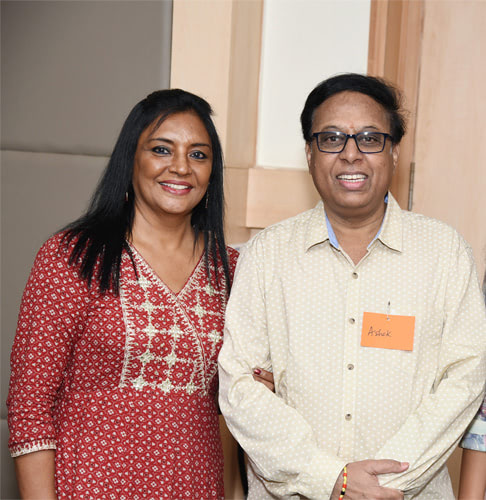
In the early years of GIPAP, I met Ashok, a talented cinematographer whose life had been turned upside down by a diagnosis of chronic myeloid leukemia (CML). Like so many patients at that time, the diagnosis brought fear, uncertainty, and a profound sense of loss. Ashok and his wife were devastated. Beyond the emotional impact of cancer, they were facing the very real possibility of losing everything they had worked so hard to build.
I still vividly remember the day Ashok received his first supply of imatinib through the program. A few days later, I received a large bouquet of red roses from his wife as a token of gratitude. It was such a simple gesture, but one that has remained with me all these years. The flowers were not really about the medicine; they were about what it represented—a second chance, renewed hope, and the belief that their future had not been taken away from them.
What followed was remarkable. With access to treatment and unwavering determination, Ashok slowly rebuilt his life. Today, he is a celebrated cinematographer in South India and a respected patient advocate who continues to inspire others with his journey. Seeing him thrive, continue his creative work, and use his voice to support fellow patients has been one of the most meaningful experiences of my career.
For me, Ashok’s story captures the essence of our 25-year partnership with Novartis. We were not simply helping patients access treatment; we were helping people reclaim their dreams, their identities, and their futures.
At a time when access to life-saving cancer treatment was beyond the reach of many patients in countries like India, The Max Foundation and Novartis came together around a shared belief—that where a person lives should never determine whether they have the opportunity to live. That belief changed countless lives.
Why this moment remains so significant is that it fundamentally changed our understanding of what was possible. It showed us that when scientific innovation is combined with compassion and a patient-centered approach, the impact extends far beyond health outcomes. It strengthens families, restores livelihoods, builds communities, and creates hope where there was once despair.
Looking back, those early GIPAP years laid the foundation for everything that followed. They helped us build trusted relationships with patients and physicians, strengthen healthcare systems, expand access to new treatments, and ultimately reach hundreds of thousands of patients around the world.
Twenty-five years later, what inspires me most is not the scale of what we have achieved, but the individual stories behind the numbers. Stories like Ashok’s remind us why this partnership matters. They remind us that access to treatment brings more than medicine—it gives people the chance to keep living the lives they cherish, pursue their passions, care for their families, and look ahead with hope.
And every time I think of those red roses, I am reminded that sometimes the true impact of a partnership is measured not in programs or milestones, but in the lives restored and the futures made possible.”
Nelia Medina Program Officer, Asia & Eastern Europe 22 years with The Max Foundation
“Of all the moments in our 25-year partnership with Novartis, one remains etched in my memory.
Every year, during the Glivec International Patient Assistance Program (GIPAP) anniversary celebration, patients gathered not only to celebrate another year of life but also to express their heartfelt gratitude to the people who made that possible. One tradition that I will never forget was watching our pediatric chronic myeloid leukemia (CML) patients personally present flowers to each member of the Novartis team. It was a simple gesture, yet it carried profound meaning.
As I listened to patients share how they had watched their children grow up, returned to work, and rebuilt the lives they thought they had lost, I could see the emotions on the faces of the Novartis team. Many were moved to tears. In those moments, I realized that our partnership was never just about providing medicine. It was about giving people back their future.
That single moment captured the true essence of our 25-year partnership. GIPAP and today, Max Access Solutions- has never been just a patient assistance program. It represents what is possible when compassion, partnership, and a shared commitment to equitable healthcare come together.
Today, as that legacy continues, I am reminded that behind every treatment provided is a person, a family, and a future changed. I feel privileged to have witnessed this partnership transform so many lives over the past 25 years.”
Mei Ching Ong Region Head, Asia & Eastern Europe 22 years with The Max Foundation
“I began as the program coordinator for The Max Foundation in Malaysia in 2004, shortly after graduating from college. At that time, the concept of a patient support group was not widely known in Malaysia, and I had not encountered this idea before joining Max.
Through my role supporting patients in the Glivec International Assistance Program (GIPAP), I met many people living with chronic myeloid leukemia (CML) who often asked similar questions, like, “Am I the only one with this leukemia?,” and, “Am I going to die soon?”
These questions led me to think about how important it would be to connect people living with the same condition, so they could meet one another and realize they were not alone. The idea was simple—bring patients together to meet, connect, listen, and support one another through the cancer journey.
Around the same time, I learned about Friends of Max, the patient support group in India, through a colleague based there. After learning of Friends of Max’s origins, I developed an initial action plan and decided to try organizing a physical gathering for patients in Malaysia.
In early 2006, I took the first step by calling patients to invite them to the first meeting on a Saturday morning at the hematology clinic in Hospital Kuala Lumpur, then the national hematology reference center. The first meeting started with about 10 people and a humble purpose: to ensure no one had to go through the cancer journey alone.
This was the beginning of a meaningful patient support movement. Over time, the idea of patients and caregivers coming together to support each other continued to grow.
As more CML patients gained access to treatment and confidence in their own journey, many wanted to support newly diagnosed patients so they would not have to face the same fears alone.
In 2009, the local patient support group was officially registered in Malaysia as Max Family Society Malaysia, marking an important milestone. Today, in 2026, Max Family Society Malaysia continues to provide patient support and advocacy, helping ensure that no CML patient has to face the journey alone.
There have been many special moments working with the local patient community over the years, but a few stand out for me:
In 2017, Max staff and patients supported by our program climbed Mt Kinabalu.
I witnessed a teenager sail through the CML journey and graduate as a young professional from a local university.
I saw how a patient living with CML since her early years in college get married and successfully give birth to a baby boy.”
Pat Garcia-Gonzalez CEO and Co-founder 29 years with The Max Foundation
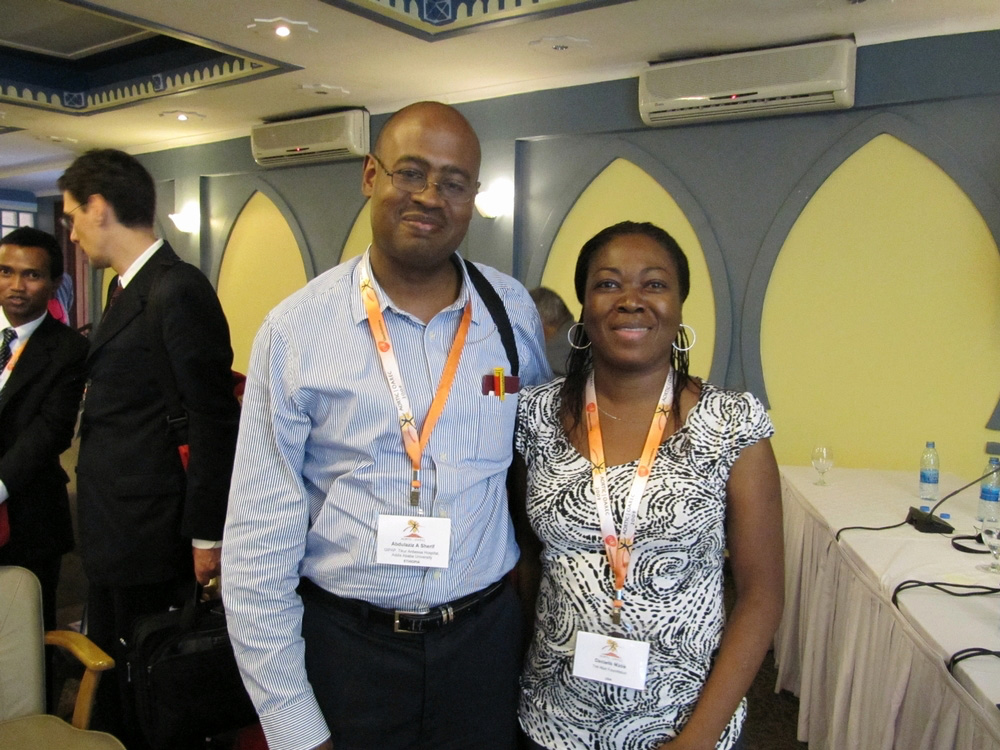
“I recall my first visit to Africa in November 2009 to attend the AORTIC Conference. By then, we had been managing the Novartis Glivec access program for eight years, collaborating with physicians in many countries in Africa, all done only via email. This was going to be the first opportunity to meet some of them in person. At the time, together with Novartis, we were helping 200 people in Ethiopia access this medicine. So, when I met Dr. Abdul Assis, one of two hematologists in the country at that time, I expressed my gratitude for playing a role in the lives of these 200 patients.
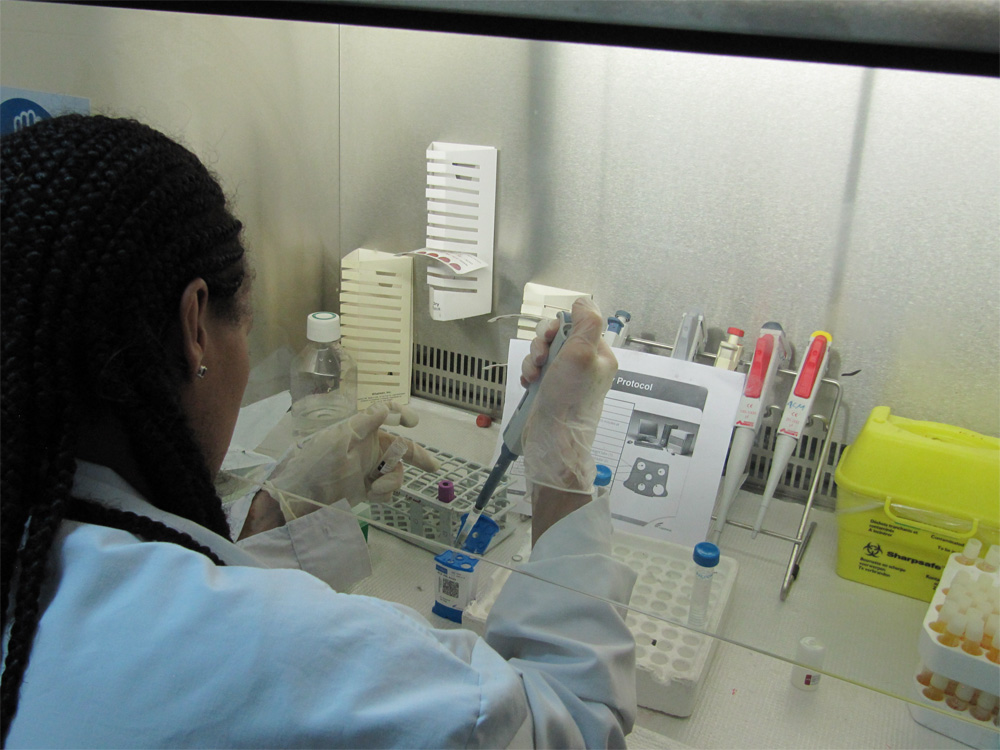
Dr. Assis explained to me that while these 200 patients were able to access their medicine, there were 400 other patients who did not have the means to send their blood sample overseas to confirm their diagnosis. It was only then that I learned that in Ethiopia, and in most low- and middle-income countries, while the treatment was being made available, hospitals did not have the infrastructure to confirm the diagnosis.
Two years later, the first molecular test for chronic myeloid leukemia (CML) in Sub-Saharan Africa was performed in Black Lion Hospital in Addis Ababa, Ethiopia. Today, 16 years later, while challenges still exist, molecular diagnostics are available to many CML patients at an affordable price in their own country. In Ethiopia, 2,000 CML patients have been able to access treatment for CML, and there are at least 11 hematologists treating them.
This experience taught me that making innovative medicines accessible can be a health system strengthening accelerator, providing the urgency to elevate the health system to meet the demands.”
Cathy Scheepers Region Head, Africa 16 years with The Max Foundation
“One of the moments to date that has stayed with me is the launch of our chronic myeloid leukemia (CML) program in Mozambique in 2019.
It began with a call from Dr. Ellen Baker, Director of Project ECHO and Cervical Cancer Prevention at The University of Texas MD Anderson Cancer Center, who reached out to ask whether The Max Foundation could help CML patients there. At the time, a small number of patients were receiving imatinib in South Africa. In Mozambique, access to treatment was inconsistent, monitoring was unavailable, and treatment interruptions were a reality. Many believed a program could not be launched there. We heard every reason why it would be difficult: diagnostic limitations, supply chain challenges, regulatory barriers, political instability, and limited government engagement.
I traveled to Mozambique and met with her, the hematologist Dr. Patricia Silva, local stakeholders, and partner organizations. What I saw was not impossible—it was need. We had faced challenges like these before, knew we had done it before, and that we could also make a difference for patients and the health system.
I still remember sitting next to our partner at Novartis, Geoff Cook, former Global Head of External and Patient Relations at Novartis Oncology, at a CML conference and how I ambushed him by sharing photographs and stories of patients who were waiting for help.
Novartis trusted The Max Foundation’s vision and agreed to expand support to Mozambique, despite the significant hurdles. A special amendment was made to the existing country list, and that decision changed lives.
One patient, Ricardo, had shared an emotional plea before the program launched, simply asking for someone to help. By chance, he became one of the first patients to receive treatment through the new program. As luck would happen, Max Co-founder and CEO Pat Garcia-Gonzalez and I were in Mozambique attending the AORTIC conference when the first product was delivered. We were able to witness the first patients receiving their medication in November 2019, witnessing new chapters open in front of our eyes.
Years later, Ricardo was talking about his future, planning his wedding, and living a life that once seemed uncertain.
Today, Mozambique is no longer just a CML program. It includes diagnostics, breast cancer support, and a growing network of care. To date, we have helped 131 CML patients and 71 breast cancer patients with access to treatment. For me, it remains a powerful reminder that when partners trust one another and put patients first, barriers that seem impossible can become opportunities to change lives.”
Viji Venkatesh Max Board Member and former Region Head, South Asia 23 years with The Max Foundation
“Twenty-five years is a lifetime. Twenty-five years is a quarter of a century. Twenty-five years is 25 years more of life with loved ones in a family sentenced with the diagnosis of a fatal, life-limiting—nay—life-threatening condition. Twenty-five years is that many more Christmases and Idd and Diwalis with family and friends. It is seeing your children grow. It is getting married and having your own children. And it is that many more years to cherish all that this gift of life brings to us. And to have been part of creating and wrapping and delivering this gift of life to thousands of people facing certain death … there cannot be a more humbling experience than that.
Did we as stakeholders even ever imagine at Novartis and The Max Foundation what impact this simple act of generosity and kindness was going to have? Once the monumental decision was made to provide access to the life-extending drug at no cost to patients with chronic myeloid leukemia (CML) and gastrointestinal stromal tumor (GIST), for us it was just a matter of ensuring no patient went without.
And as we enrolled more and more patients into the program, it was imperative that we ensured compliance and monitoring so they remained well and went about the business of living their lives to the full. It was organic the system we put in place. It was spontaneous, and it was effective. We all came together and charted the way ahead. Like Lord Krishna in the Mahabharata told his warrior disciple, “Do your Duty, don’t look for your reward.” So, we did our duty and did it diligently, altering and enhancing the lives of our patients and their families. Then came that moment upon us when the unexpected and unsought for reward was staring us in the face.
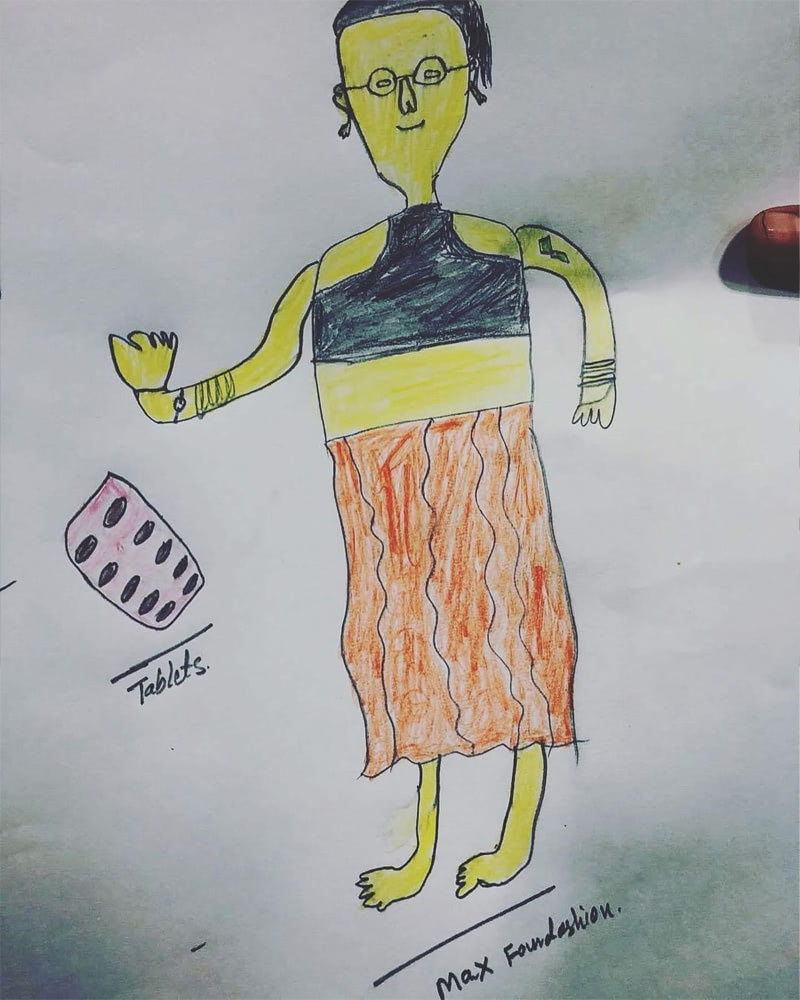
It was at an art therapy workshop I was conducting at a Patient Support Group meeting in the city of Aurangabad, perhaps 10 odd years after the setting up of Friends of Max, our patient support group in India, and 12 years after the medication access program had been in place. One of the participants, a young man, a patient perhaps in his mid-30s, shyly submitted his piece of artwork to me. The theme for the session had been “Hope,” and its visual depicting of hope as one saw it. “This is what gives me hope, Amma,“ he said to me. What I saw brought a rush of tears to my eyes. Tears of gratitude, joy, and—yes—self-realization. It was a simple depiction. The strip of treatment tablets on one side and The Max Foundation on the other. This was what symbolized hope for him.
I keep these and other images close to my heart. Because they give me also hope! Hope that we will continue to do what we have to do no matter what comes in our way. That we will continue to foster partnerships such as this with Novartis that will nurture and bring hope to thousands more.”
The Max Foundation is a leading global health nonprofit organization dedicated to accelerating health equity. For 28 years, Max has pioneered practical, scalable, high-quality solutions to bring life-extending treatments and patient-centered health care to more than 100,000 people living with cancer and critical illness in low- and middle-income countries. Max believes in a world where all people can access high-impact medicines, where geography is not destiny, and where everyone can strive for health with dignity and with hope.
Related Articles
Announcing the Excellence in Patient Advocacy Award Winner
At The Max Foundation we are all about patients; deeply, profoundly, committed to patients and by extension their families and communities. To continue to foster this commitment, once a year we honor a team member who has exemplified our values and beliefs with the Excellence in Patient Advocacy Award. We are proud to announce the….
The Legacy of Dr. Bayzakova
Today we remember Dr. Damira Bayzakova, a CML specialist and cancer advocate from Kyrgyzstan who passed away on November 16th 2020, due to complications with COVID-19. Dr. Bayzakova was an implementing partner for The Max Foundation since 2006, and was monumental in bringing life-saving treatment and cancer diagnostics into Kyrgyzstan. Dr. Bayzakova’s efforts to expand….
Critical Partnerships are Saving Lives Globally
All of us at The Max Foundation are wholly committed to maximizing every opportunity to collaborate and build new partnerships on behalf of the patients we serve in low resource settings. We are excited to move onward to a new chapter with innovative opportunities to expand our impact. We hope you will see a place for yourself to join us in this effort to close the cancer divide!
The Max Foundation uses cookies to improve your experience on our site. Please read our Privacy Policy for more information.