Meet Max Partner Physician – Professor Babatunde Duduyemi
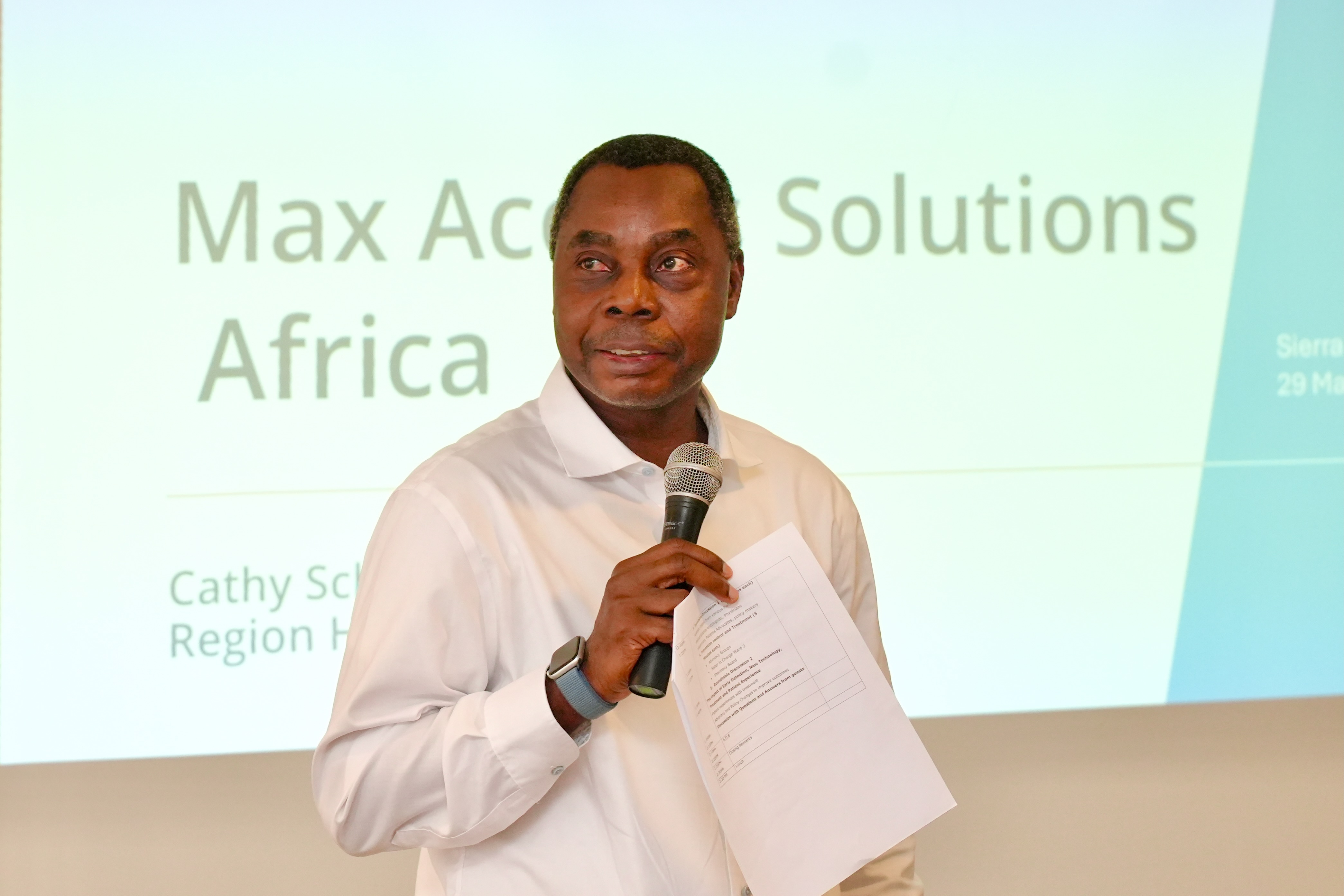
Introducing Professor Babatunde Duduyemi (Prof. Babatunde) in Freetown, Sierra Leone. He has worked as a medical provider for 29 years and partnered with The Max Foundation for 3 years.
As a young medical student, Prof. Babatunde followed with keen interest the breakthrough developments in biological and physical sciences and inter-relationship with the clinical sciences. He came to appreciate the way discoveries in the laboratory greatly influence decisions and events at the patients’ bedsides.
Prof. Babatunde’s focus is on biomedical research at the interface of basic and clinical sciences with bias for digestive diseases, women and children’s cancers, and virus-associated cancers. He’s a physician-scientist with passion for screening, diagnosis, prevention, and molecular characterization of cancers.
He’s also involved in the teaching of pathology and physiology to undergraduate medical students and allied health students; he supervises graduate students and resident doctors research projects. Learn more about him below:
Describe a typical work week:
I run a busy schedule involving routine surgical pathology daily, Cytology clinic 1-2 times a week, MDT both formal and informal, teaching and mentorship sessions, and research.
How did you hear about Max and connect with us?
Through the Thinking Pink Breast Cancer Foundation.
How many patients are you treating in our partnered program?
Two at the moment but we have ten eligible patients to be recruited.
Why do you do this work of caring for patients living with cancer?
Caring for patients (especially cancer or those with terminal illness) is like a “calling” for me. I don’t like to see anyone suffering around me.
What types of challenges do you and your patients regularly face?
As a caregiver, there are numerous challenges relating to diagnosis and management especially when you know what to do but you are handicapped because of unavailability of the required equipment, resource, tests and therapy. My patients present late and have financial difficulty; even for those who are financially okay, the requisite tests or drugs may not be available in our country.
What is a special memory you have with patients?
There are many special moments I have had and am still having with patients. Not long after I started working in Freetown, there was a child with suspected Burkitt’s lymphoma (BL) who needed Fine Needle Aspiration Cytology (FNAC). I was called to assist despite unavailability of all the necessary items. I went out of my way to do the procedure and the result confirmed BL same day (most patients were treated based on clinical and some imaging modalities before then). The patient had chemotherapy and the jaw and abdominal masses disappeared completely after two courses. The mother of the patient was filled with joy and all of us caring for her were elated. This was my first FNAC in Freetown and this paved the way for over a thousand procedure afterward.
What are your career aspirations?
My career aspiration is to be an accomplished researcher in cancer epidemiology and molecular diagnosis.
What languages do you speak?
English, Yoruba, and a little Krio.
When you’re not working, what do you like to do for fun?
Counseling, mentoring people, traveling, writing, meeting people, and playing golf
What’s your favorite food?
Pounded yam and bitter leaf soup.