Keeping Our Cool: Developing a Cold-Chain to Further Treatment Access
The Max Foundation is always seeking new ways to improve our programs and better serve people facing cancer in low- and middle-income countries. As Supply Chain & Logistics Manager, my focus is on improving our supply chain (i.e., how we move medicine from just three warehouses to 98 different hospitals and clinics around the world).
Improving a supply chain can mean different things to different people. It might mean performing quality audits, refining demand forecasting, or reducing shipping costs. It might also mean shipping a new kind of product you’ve never shipped before. That’s just the kind of improvement The Max Foundation is making right now.
Shipping and logistics is one of four pillars in our Max Access Solutions.
Patients First
The Max Foundation facilitates cancer treatment access in low- and middle-income countries around the world. Of the 15,000+ patients we support, most respond well to targeted therapy in tablet form. However, some require intravenous therapies for successful treatment, and the implications for the supply chain are huge. As a patient-centered organization, we aim to provide any therapy needed whenever possible. Recently, that’s meant adding “cold-chain” products to our supply chain.
What are “cold-chain” products?
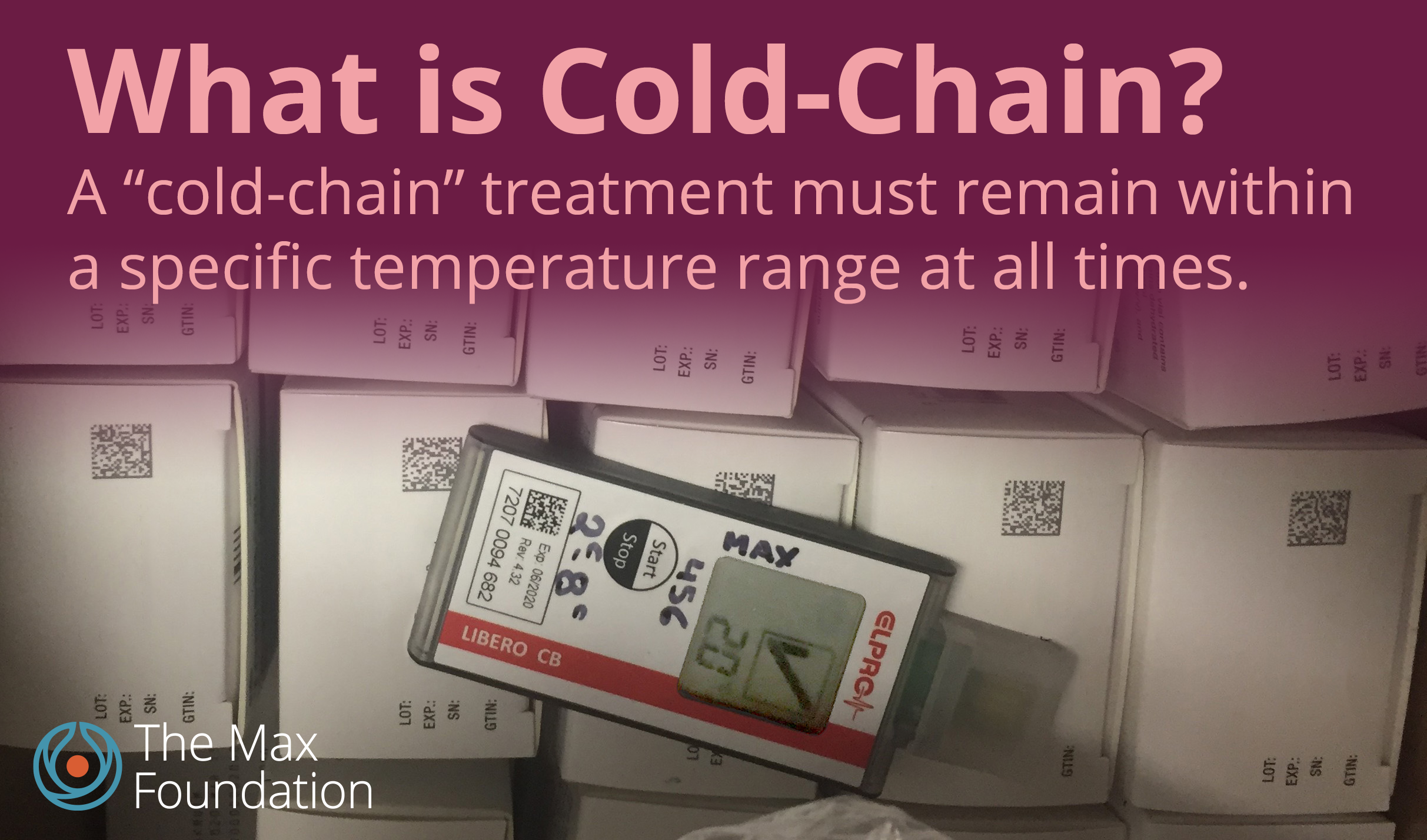
A “cold-chain” product must remain within a specific temperature range at all times. On days- or weeks-long international shipments, it’s especially challenging (and expensive) to keep medicine at a constant temperature. There can be weather shifts, customs delays, and on-site storage issues just to name a few common circumstances.
Despite the inherent challenges, adding cold-chain capability is well worth the effort for the patients we support. By doing so, The Max Foundation will be able to better meet the needs of patients who are unresponsive to tablet therapies.
Start a Cold-Chain
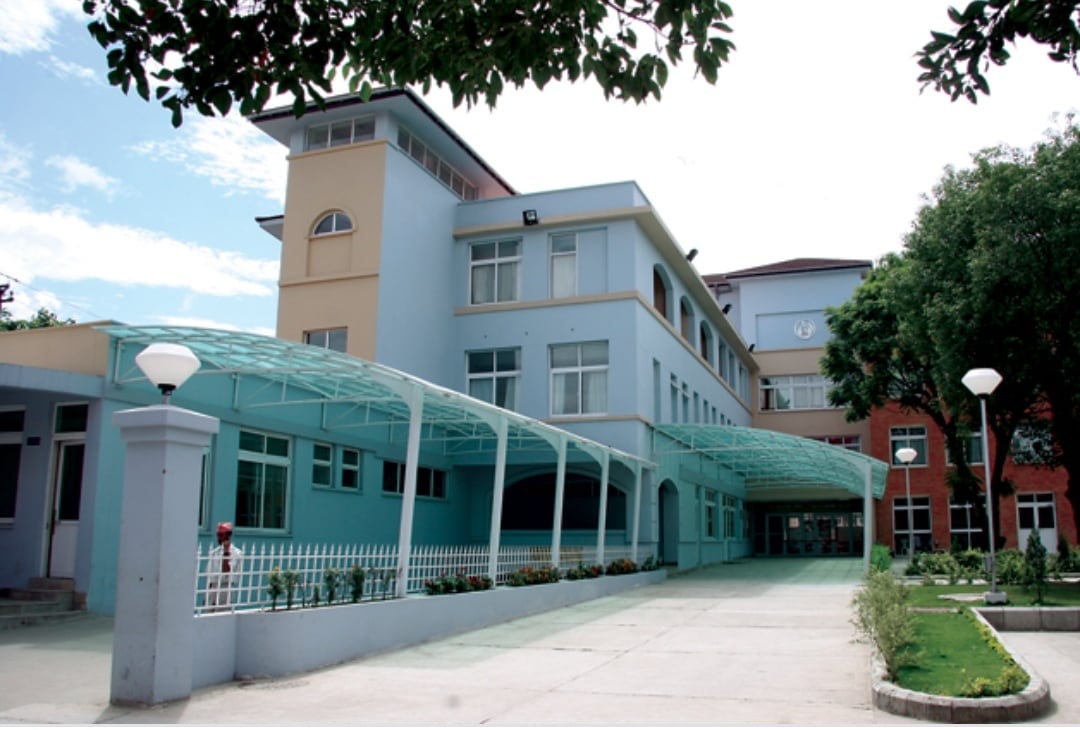
The Patan Academy of Health Sciences in Nepal
We are so proud to share that in September of 2018, The Max Foundation successfully delivered its first cold-chain product. Dr. Kayastha Gyan at the Patan Academy of Health Sciences in Nepal received a shipment of Torisel, an intravenous therapy used to treat kidney cancer.
The shipment began its journey at our distributor’s warehouse in Charlotte, North Carolina, traveled 8,012 miles, cleared customs in Nepal, and arrived at the Patan Academy of Health Sciences just over four days later. During its four-day journey, the package remained within a constant temperature range of between two and eight degrees Celsius (that’s 35.6 to 46.4 Fahrenheit). Because we were able to make this shipment, a patient in Nepal gained access to potentially lifesaving treatment.
Partners Make it Possible
We didn’t make this progress alone. Our logistics partner Tanner Pharma Group provided expertise and guided the process every step of the way. Thanks to our innovative partnership, we can continue to expand our portfolio of cancer treatments. And we can continue bringing dignity and hope to people facing cancer all over the world.
The Max Foundation is a leading global health nonprofit organization dedicated to accelerating health equity. For 28 years, Max has pioneered practical, scalable, high-quality solutions to bring life-extending treatments and patient-centered health care to more than 100,000 people living with cancer and critical illness in low- and middle-income countries. Max believes in a world where all people can access high-impact medicines, where geography is not destiny, and where everyone can strive for health with dignity and with hope.
Related Articles
The Max Foundation Joins Poptivism
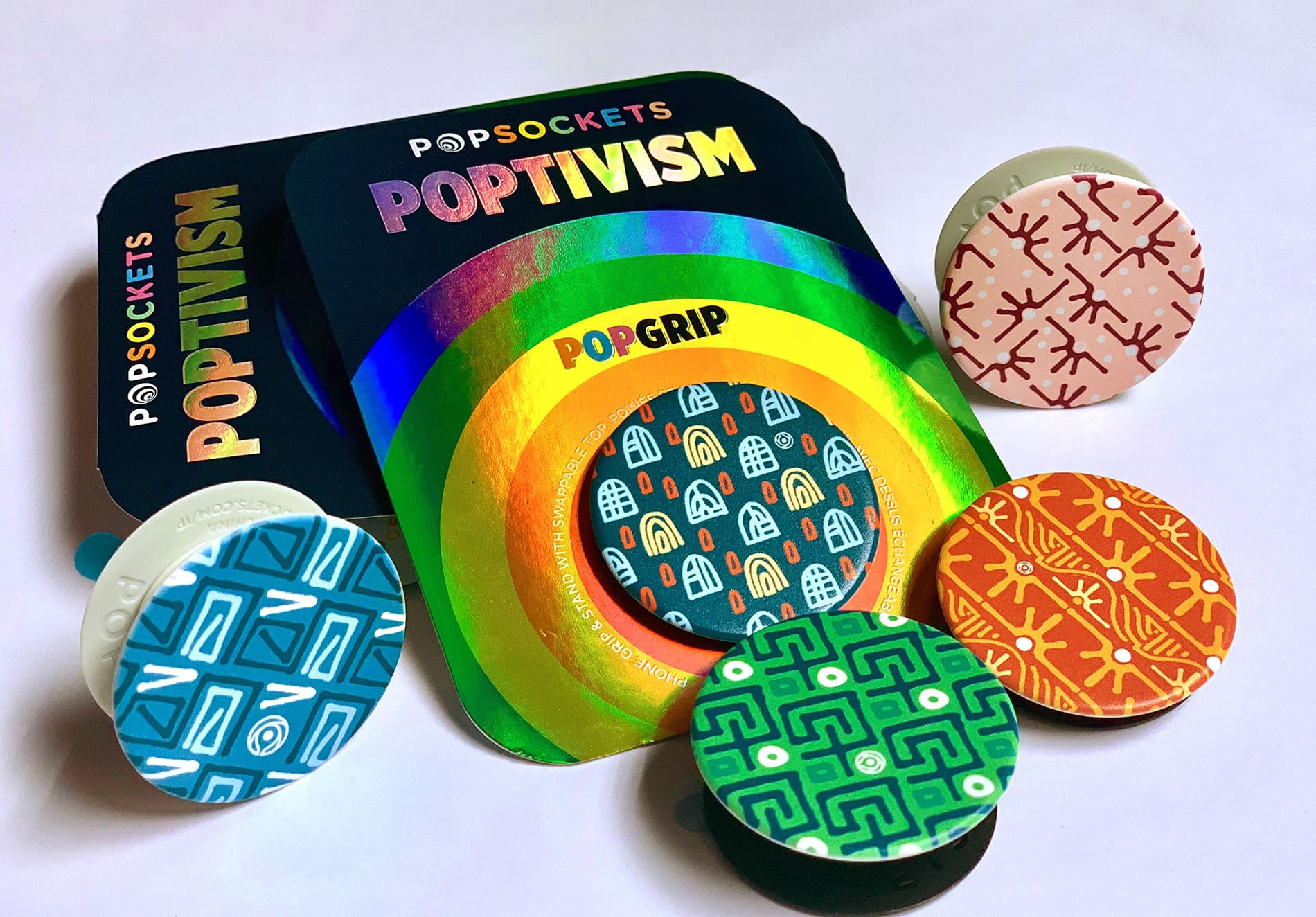
The Max Foundation is joining Poptivism — a consumer-driven charitable giving program that sells unique PopSocket Grips and donates 50% of the sales of those PopGrips to support a nonprofit’s mission (that’s us!). Please consider purchasing one of our Poptivism PopGrips today! With each purchase, you’ll help expand access to lifesaving cancer treatment the world over.
A story of Hope from a Doctor’s Perspective.
My name is Dr. Temilola Owojuyigb; I work in the Hematology and Blood Transfusion Unit, Ile-Ife, Nigeria. I decided to specialize in Hematology because hematological diseases are not often diagnosed or diagnosed late in affected persons due to a scarcity of experts. Thus, patients either do not get treatment or get treated when many complications….
The “Last Mile” to Treatment Access: Kankou’s Story
The story of Kankou, a 37-year-old mother and cancer survivor from Senegal, who makes a recurring, 450km, “last mile” journey to access cancer medication donated through The Max Foundation.
The Max Foundation uses cookies to improve your experience on our site. Please read our Privacy Policy for more information.