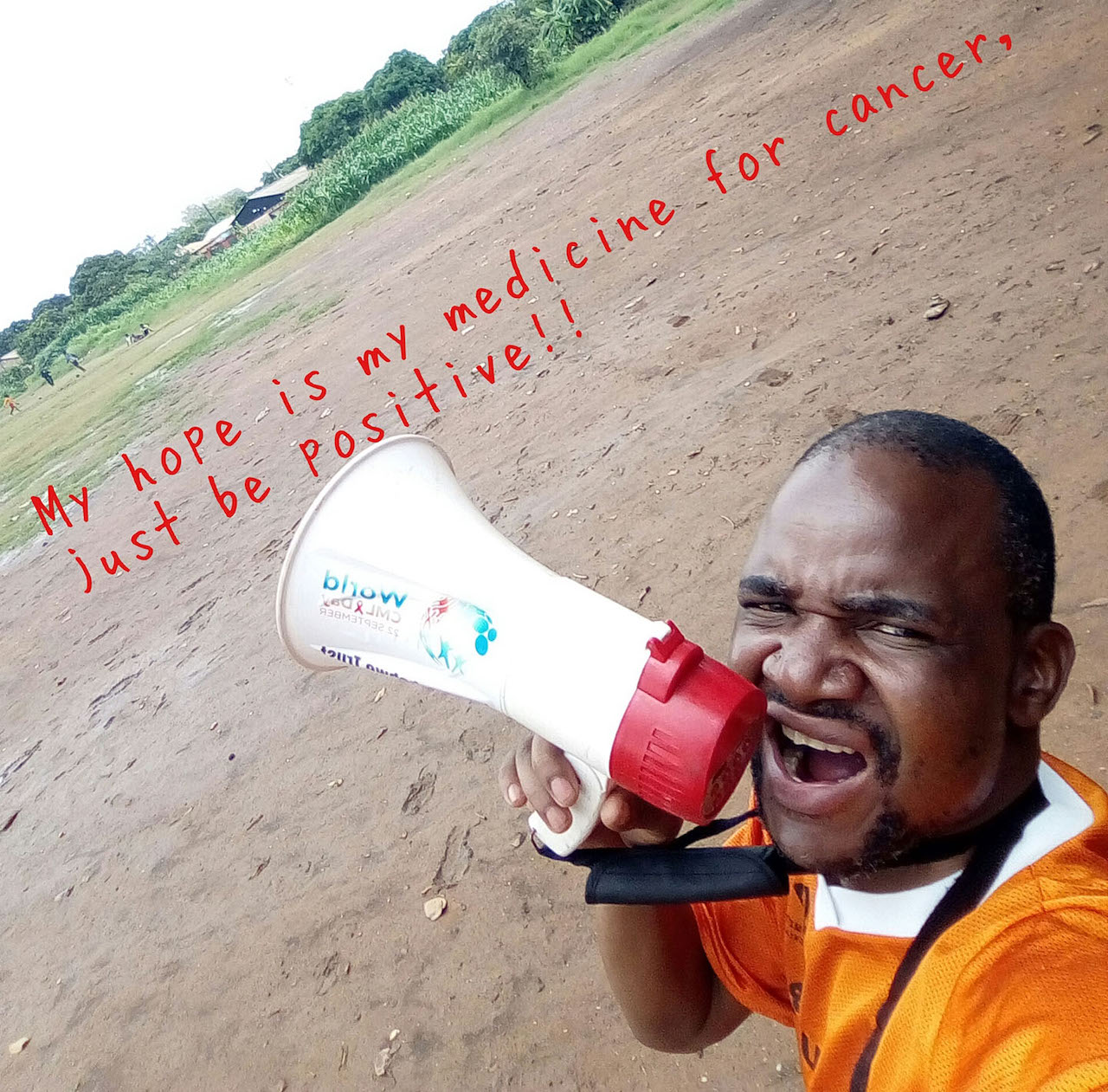
When Onward was first diagnosed with chronic myeloid leukemia (CML), he spent many sleepless nights thinking about his future. Now, 11 years later, he advocates and provides support for other people going through the same thing.
“I am now living a normal life and enjoying my cycling, and gardening, and forgetting about CML, I only remember that I am a patient when it’s time to take my medication,” he said. “I now have hope, and I am able to instill hope to newly diagnosed patients.”
Onward is a 45-year-old farmer living in Zimbabwe with his wife, Tabeth, and their four children. In 2014, he started feeling weak and losing weight, and noticed he couldn’t cycle as far.
Onward said it took a while to be diagnosed then because the blood samples had to be taken to South Africa. He also had to sell his only car and furniture to afford the tests. Finally, a doctor confirmed that he had CML.
“My wife was so young at that stage, and I was just jealous and scared of losing her to someone else or not being able to grow old with her,” he said. “It wasn’t easy to accept.”
The doctor said medication was expensive, so he recommended our program. The Max Foundation and its partners provide access to treatment free of charge. After treatment, Onward started feeling better. He said every time he went for a checkup, there was good news.
In 2015, after encouragement from a Max team member, Onward became one of four founding members of the CML Zimbabwe Trust. They provide support, comfort, and education for patients. Currently, they’re letting people know about the transportation grants from Max to motivate them to seek treatment.
“I would like to thank the Max Foundation for the donation of the medication, which saves hundreds of patients in my country,” Onward said.
In 2022, Onward and Tabeth welcomed their fourth child, a son. Although he lost sleep over his diagnosis, Onward said he’s now proud to share his story and pass hope along to others.
The Max Foundation is a leading global health nonprofit organization dedicated to accelerating health equity. For 28 years, Max has pioneered practical, scalable, high-quality solutions to bring life-extending treatments and patient-centered health care to more than 100,000 people living with cancer and critical illness in low- and middle-income countries. Max believes in a world where all people can access high-impact medicines, where geography is not destiny, and where everyone can strive for health with dignity and with hope.
Related Articles
A Chance Encounter
Suddenly, I noticed a man sitting just opposite to me staring at me. I thought he was annoyed at my loud voice. so I reduced my volume and kept on talking with my friend. While explaining, my eyes went towards the man. Again I noticed he was keenly listening to our conversation.
Finally the stop came! I got down with my friend and took 10 steps. I heard a voice behind me calling “Madam, madam!”
Each October 19th, We Remember Max on the Anniversary of His Birthday
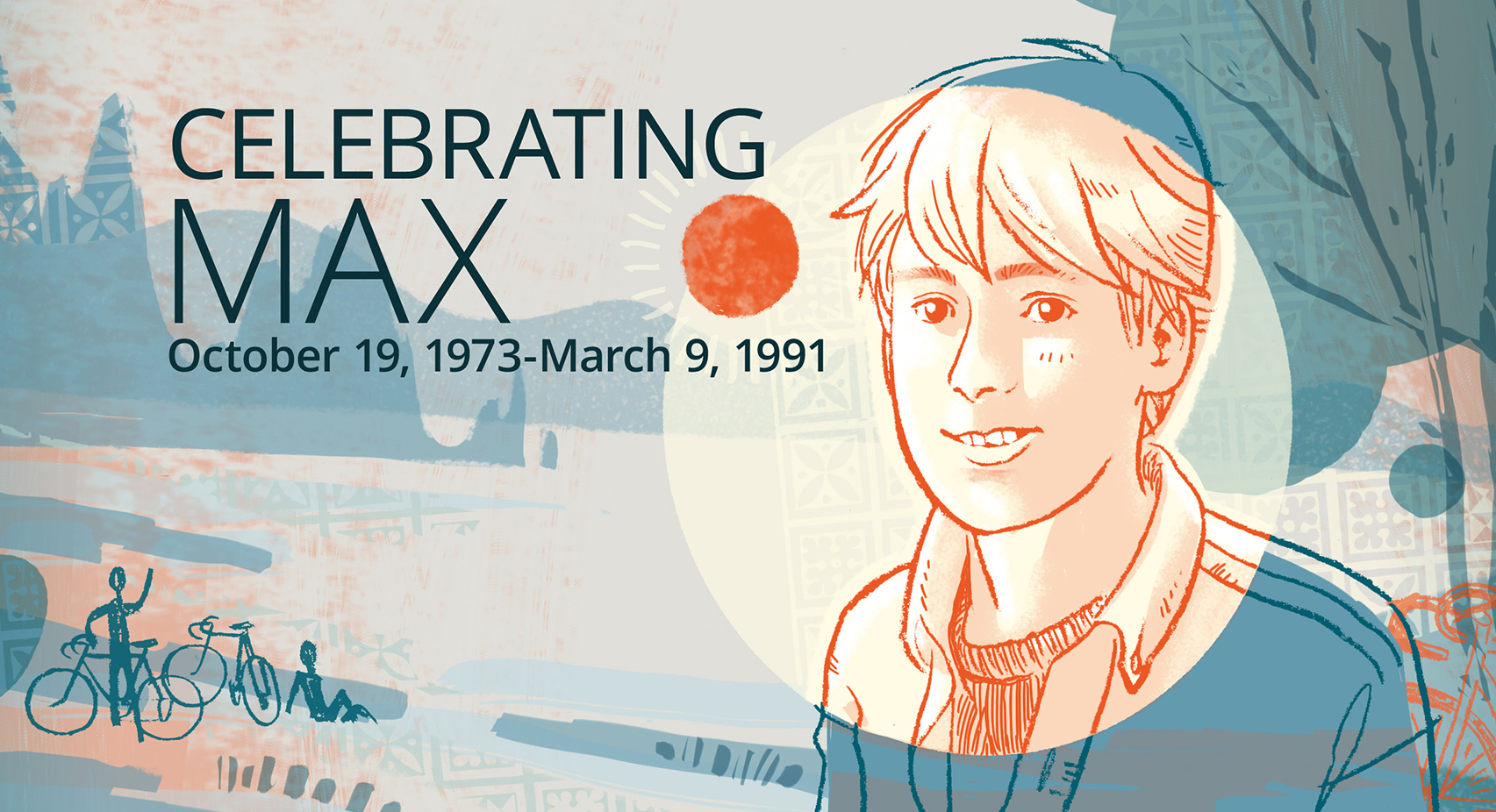
Max, today we remember you on the anniversary of your birthday. October 19th is, and forever will be your day, Max’s Day. Today is a day filled with joy, love, and hope; a day we celebrate your life and honor your spirit, still shining bright through so many people in all corners of the world…..
Chai for Cancer USA 2016: On the Road!
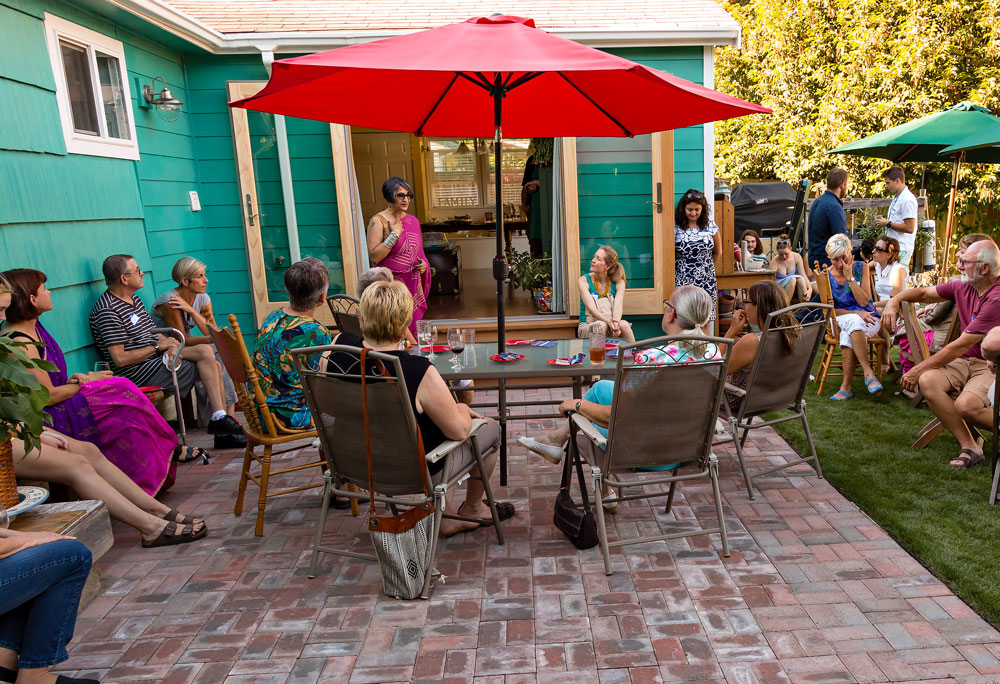
In July, we are kicking off the second year of Chai for Cancer USA, a fundraising campaign that expands access to treatment for people facing cancer in India. For 6 weeks, South Asia Region Head Viji Venkatesh will travel across the country to meet with our friends and supporters, bringing together our community in support….
The Max Foundation uses cookies to improve your experience on our site. Please read our Privacy Policy for more information.