Do Not Lose Heart, Be Positive and Prove Your Mettle

Do Not Lose Heart, Be Positive and Prove Your Mettle

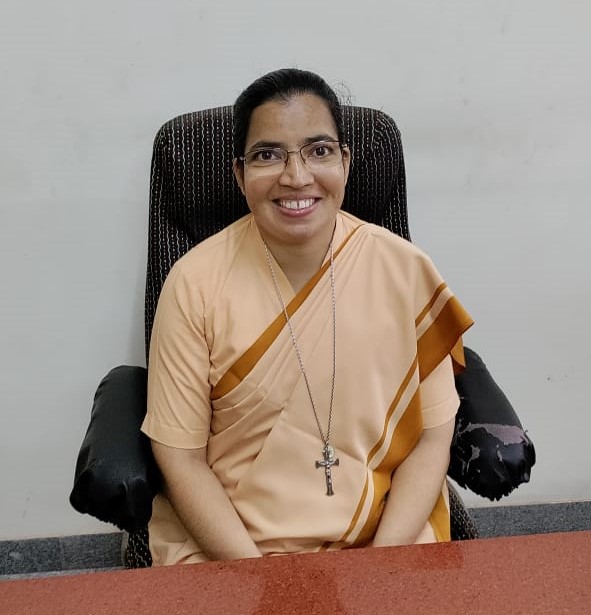
Shalet Souza is a 42-year-old nun at the Institute of Sisters of the Little Flower of Bethany, in Mangalore, India. She currently takes care of aspiring nuns and lives a life devoted to learning and supporting others, including the poor and needy in her region.

At 29, Shalet sought treatment for frequent fevers, which would normally resolve themselves within a few days. During that time, she was selected to study religion at Vidya Jyothi College in Delhi. Shalet was encouraged by a colleague to get a proper blood test as a precaution before she left for her studies. The test was a blessing in disguise, indicating that her white blood cell count was abnormal.

Further examination, including testing of her bone marrow, led to a diagnosis of leukemia. Despite the shocking news, Shalet remained optimistic thanks to the support of her family and congregation. Her doctor prescribed medication to treat her disease and directed her to The Max Foundation (Max).

Through Max, she is provided with the necessary dosage free of cost and periodic blood tests confirm the quantity of cancerous cells present in her blood. Shalet views the nausea caused by the medication to be a minor symptom compared to the chemotherapy and radiation that other patients are suffering through.

Shalet now considers The Max Foundation to be her second care home and has bonded with fellow patients over the years. She’s thankful for the Max-led awareness programs and activities, as well as insights from doctors that relieve her doubts. She continues to live a healthy and happy life and encourages her fellow patients to “not lose heart, take courage, and be positive. Cancer is a small test to prove our mettle.”

The Max Foundation is a leading global health nonprofit organization dedicated to accelerating health equity. For 28 years, Max has pioneered practical, scalable, high-quality solutions to bring life-extending treatments and patient-centered health care to more than 100,000 people living with cancer and critical illness in low- and middle-income countries. Max believes in a world where all people can access high-impact medicines, where geography is not destiny, and where everyone can strive for health with dignity and with hope.

Related Articles

  • Coming Together on World CML Day 2020

    Coming Together on World CML Day 2020

    September 22 is World CML Day! Our Region Head Mei Ching Ong caught up with our partner physician in Armenia to talk about the importance of this day and bridging access to treatment and care for CML patients worldwide.

  • The Maximize Life Campaign: A Variety of Events but a Shared Message in Latin America

    The Maximize Life Campaign: A Variety of Events but a Shared Message in Latin America

    In Latin America, the Maximize Life Campaign has become something like a tradition – a time when each patient organization creates an event or activity of their choice and powers it up for a campaign that takes on a life of its own!

    13 patient groups from 11 Latin American countries joined this year’s movement, bringing together patients and caregivers with the purpose of telling the community that cancer is an issue, that ignoring it is not going to make it go away, and that the best approach is to learn about it in order to know what to do about it. From governments to the general public, everybody can get involved in figuring out how to treat cancer patients as members of society and not as a burden.

  • Finding Value in the Patient Experience

    Finding Value in the Patient Experience

    Health systems around the world are strained due to the high burden of costs. In an attempt to guide decision-makers in their choices on behalf of patients, the topic of value frameworks was born. These value frameworks evaluate all aspects of cancer treatment: clinical benefit, side effects, and improvement in patient symptoms or quality of life. But given the complexities of the multitude of health systems around the world, it is not a straightforward discussion. And right now, it’s a dialogue driven by thought leaders and health economists from the US and Europe. But there are critical voices is missing from this discussion: patients and patient advocates.